The drug supply on American streets is evolving in ways that are making an already deadly crisis even more complex. In 2024, a veterinary sedative called medetomidine began appearing in cities across the country, mixed into fentanyl and heroin. By late 2024, this powerful tranquilizer had become the dominant adulterant in Philadelphia’s drug supply, overtaking xylazine and creating new challenges for healthcare providers, people who use drugs, and communities already devastated by the opioid epidemic.
Understanding what medetomidine is, where it’s showing up, and why it’s so dangerous isn’t just important for medical professionals. It’s critical information for anyone working in substance use treatment, harm reduction, criminal justice, or community health.
What Is Medetomidine?
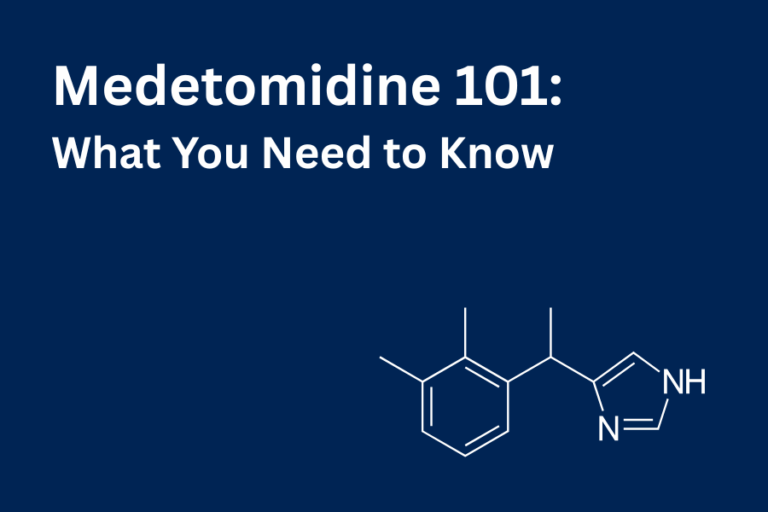
Medetomidine is a synthetic alpha-2 adrenergic agonist, the same class of drugs that includes xylazine and clonidine. It’s used in veterinary medicine to sedate animals during procedures and examinations, providing pain relief and muscle relaxation. The drug has a close relative called dexmedetomidine, which is FDA-approved for human use in carefully controlled hospital settings as a sedative.
But medetomidine itself has never been approved for human use. There are no human studies on safe dosing, no research on drug interactions, and no established protocols for treating exposure or withdrawal. Everything we’re learning about how medetomidine affects people is being discovered in real time, in emergency departments and intensive care units across the country.
What makes medetomidine particularly alarming is its potency. Experts estimate it’s 100 to 200 times more powerful than xylazine, which itself has caused significant harm over the past several years. Even tiny amounts can have profound effects on the human body.
The Emergence: From Lab to Street
The first confirmed detection of medetomidine as a street drug adulterant occurred in Maryland in July 2022. At that point, it appeared sporadically in drug samples, usually alongside fentanyl and xylazine. Throughout 2023, researchers began seeing it more regularly in states including Pennsylvania, Missouri, Colorado, and California.
But it was in spring 2024 that medetomidine truly emerged as a major threat. In April, Philadelphia experienced a cluster of unusual overdoses. Emergency department doctors began stopping toxicologists in hospital hallways to report something strange. Patients were coming in with heart rates in the 20s (normal is 60 to 100 beats per minute), prolonged sedation that didn’t respond normally to naloxone, and symptoms that didn’t match the typical fentanyl overdose pattern they’d grown accustomed to seeing.
When drug samples were tested, medetomidine was there. By May, the same thing was happening in Pittsburgh and Chicago. Mass overdose outbreaks involving medetomidine-laced fentanyl affected nearly 100 people in Philadelphia over just three days.
The numbers tell a stark story. In Philadelphia, medetomidine was present in just 29% of drug samples in May 2024. By November 2024, that number had jumped to 87%. During the same period, xylazine detection dropped from 97% to 42%. Medetomidine wasn’t just showing up in the drug supply. It was taking over.
As of early 2025, drug checking programs in Philadelphia found medetomidine in 72% of illicit opioid samples, while xylazine had plummeted to just 31%. Fentanyl remained present in 100% of tested samples. The street names people use for this combination vary, but “rhino tranq” and “flysky” have emerged in different cities.
Where It’s Being Found
While Philadelphia has seen the most dramatic surge, medetomidine is not a regional problem. It has been detected across the United States and into Canada. The earliest confirmed cases appeared in Maryland, but the drug has since spread to:
- Pennsylvania (Philadelphia and Pittsburgh see the highest concentrations)
- Illinois (Chicago experienced major outbreak clusters in May 2024)
- Ohio (the state with the most submissions testing positive for medetomidine in 2023)
- Virginia, Missouri, Colorado, California, Florida, Indiana, New Jersey, West Virginia, North Carolina, and the District of Columbia
- Toronto and Vancouver in Canada
The U.S. has become the world’s largest importer of medetomidine, with 813 shipments in 2024, followed by India and Chile. This suggests organized, large-scale importation for the purpose of adulterating street drugs.
The geographic pattern mirrors xylazine’s spread several years earlier. What started as isolated detections in a few areas rapidly became widespread. Public health officials are now watching to see which cities will be next.
The Risks: A Two-Part Danger
Medetomidine creates danger in two distinct phases: during active use and overdose, and during withdrawal. Both present life-threatening complications.
Overdose Effects
When someone uses fentanyl that’s been cut with medetomidine, they’re exposing themselves to multiple central nervous system depressants at once. The effects can include:
- Profound and prolonged sedation lasting much longer than a typical fentanyl high
- Extremely low heart rate (bradycardia), sometimes dropping into the 20s
- Dangerously low blood pressure (hypotension)
- Severely slowed or stopped breathing (respiratory depression)
- Peripheral vasoconstriction (narrowing of blood vessels)
- Tremors and shaking
- Nausea and vomiting
- In some cases, hallucinations
The sedation from medetomidine can last two to three hours in medical settings where controlled doses are used. On the street, where dosages are unknown and the drug is combined with other substances, people have reported sedation and recovery times requiring hospital admission.
Here’s what makes this particularly dangerous: naloxone (Narcan) can reverse the fentanyl component of an overdose, but it does nothing for medetomidine. A person might start breathing again after receiving naloxone, but they can remain deeply unconscious for hours due to medetomidine’s sedative effects. They remain at risk for aspiration, continued respiratory depression, and other complications.
There are two medications that can reverse medetomidine’s effects in animals: atipamezole and yohimbine. Neither is FDA-approved for human use, so they’re not available as antidotes when someone overdoses on street drugs.
Withdrawal: A Medical Emergency
If the overdose risks weren’t enough, medetomidine has introduced another layer of danger. People who use fentanyl regularly, that’s been cut with medetomidine, can develop physical dependence on the medetomidine itself. When they stop using, they experience withdrawal from both the opioid and the alpha-2 agonist.
Medetomidine withdrawal is severe, sudden, and can be life-threatening. Between September 2024 and January 2025, three Philadelphia health systems identified 165 patients hospitalized for fentanyl withdrawal complicated by what they eventually recognized as medetomidine withdrawal syndrome. Ninety-one percent of those patients required intensive care unit admission. Nearly one quarter needed to be intubated (placed on a breathing tube).
The symptoms of medetomidine withdrawal include:
- Severe hypertension (dangerously high blood pressure)
- Rapid heart rate (tachycardia)
- Intense anxiety and agitation
- Uncontrollable nausea and vomiting
- Violent shaking and tremors
- Waxing and waning alertness
- Symptoms that can start within hours of last use and peak within 18 to 36 hours
What makes this withdrawal syndrome so dangerous is that it’s resistant to the medications that typically work for opioid withdrawal. Standard protocols that have been used successfully for years suddenly stopped working. Patients would receive appropriate doses of methadone or buprenorphine, along with comfort medications like clonidine, and still experience such severe symptoms that they required ICU-level care.
Some patients have experienced complications from the extreme blood pressure swings, including:
- Non-ST elevation myocardial infarction (a type of heart attack)
- Posterior Reversible Encephalopathy Syndrome (PRES), a condition affecting the brain
- Suspected brain damage from sustained high blood pressure
Doctors in Philadelphia and Pittsburgh eventually discovered that dexmedetomidine (the FDA-approved medication closely related to medetomidine) could help manage the withdrawal symptoms. About 83% of patients responded to dexmedetomidine infusions. But this medication is typically only available in hospital settings, particularly ICUs, and requires careful titration and monitoring.
The withdrawal process has created a crisis within the crisis. Traditional addiction treatment facilities like inpatient rehabs and detox clinics cannot dispense the powerful medications needed to safely manage medetomidine withdrawal. Hospitals can provide these medications, but insurance companies often won’t cover hospital admission solely for opioid withdrawal unless it becomes life-threatening. This leaves people caught in an impossible situation, often leaving treatment facilities when symptoms become unbearable, but unable to access hospital care until they’re in medical crisis.
Why Dealers Are Adding It
The question everyone asks is: why would drug dealers add veterinary tranquilizers to their products, especially ones that make overdoses more likely and withdrawals more severe?
The answer isn’t entirely clear, but there are several theories:
Extending the high: Fentanyl’s effects wear off quickly, sometimes within a few hours. This is actually one of the features that makes it so dangerous, as people use multiple times throughout the day. Adding sedatives like medetomidine may prolong the opioid high, making the product more desirable to people who use drugs regularly.
Economic factors: As certain adulterants become regulated or harder to obtain, dealers look for alternatives. When xylazine was categorized as a Schedule III drug in Pennsylvania, placing restrictions on its sale and use, medetomidine may have emerged as a replacement that was still easy to source.
Supply chain availability: The fact that the U.S. became the world’s largest importer of medetomidine in 2024 suggests that the drug became readily available through existing supply chains. If a substance is cheap, accessible, and serves a purpose in the product (even if that purpose creates additional harm), it gets used.
Lack of awareness: It’s possible that some people in the drug supply chain don’t fully understand the dangers they’re introducing. They may see medetomidine as “like xylazine” without recognizing how much more potent it is or the severe withdrawal syndrome it can cause.
What’s clear is that the decision to adulterate drugs with medetomidine is having devastating consequences for people who use drugs, who often have no idea what they’re consuming.
What This Means for Communities and Healthcare
The emergence of medetomidine represents a significant shift in the opioid crisis. Healthcare systems, harm reduction programs, and addiction treatment providers need to adapt quickly.
For healthcare providers, this means:
- Being prepared to manage severe withdrawal syndromes that don’t respond to standard protocols
- Having access to dexmedetomidine and other specialized medications
- Understanding that standard drug screens may not detect medetomidine (only two out of ten patients in one Pittsburgh study had detectable parent compound on comprehensive urine screening, though all had medetomidine metabolites when samples were analyzed retrospectively)
- Recognizing unusual symptom patterns in both overdose and withdrawal cases
- For harm reduction programs and outreach workers, this means:
- Educating people who use drugs about the presence of medetomidine in the supply
- Distributing medetomidine test strips, which became commercially available in 2024 (Philadelphia Department of Public Health, 2024a)
- Emphasizing that naloxone will reverse the fentanyl component of an overdose but won’t address medetomidine’s sedative effects
- Encouraging the use of lower-dose naloxone products to restore breathing without precipitating severe withdrawal
- Teaching people to expect prolonged sedation and to ensure someone stays with the person after an overdose until they fully regain consciousness
- For people who use drugs, this means:
- Understanding that the drug supply is more dangerous and unpredictable than ever
- Testing substances when possible
- Never using alone if it can be avoided
- Being aware that withdrawal symptoms may be more severe and start more rapidly than with fentanyl alone
- Knowing that seeking medical help early in withdrawal, rather than waiting until symptoms become life-threatening, can prevent serious complications
- For families and communities, this means:
- Recognizing that the landscape of addiction and overdose is constantly changing
- Supporting evidence-based treatment approaches that can adapt to new threats
- Pushing for better access to medications and medical care for people experiencing withdrawal
- Understanding that harm reduction strategies are not enabling drug use, but rather keeping people alive while the drug supply grows increasingly toxic
The Larger Picture
Medetomidine is just the latest example of how the illicit drug supply continues to evolve in dangerous and unpredictable ways. Neither medetomidine nor xylazine was developed for human consumption. There are no human studies examining their drug interactions, lethal doses, or safe reversal protocols. Yet people are being exposed to them every day, often without their knowledge.
This pattern isn’t new. The opioid crisis has evolved through distinct waves: prescription opioid misuse in the 1990s and early 2000s, a shift to heroin as prescribing became more restricted, the emergence of illicitly manufactured fentanyl, the addition of xylazine, and now medetomidine. Each wave has brought new challenges and required new responses.
What is new is the speed at which these changes are happening. Nine months passed between the identification of medetomidine as a significant threat and the release of official treatment guidelines. While public health officials consider this rapid response a success, nine months is a long time for people facing life-threatening withdrawal with no established treatment protocol.
The Philadelphia Department of Public Health, along with the CDC and healthcare systems across the country, has responded by issuing health alerts, developing treatment guidance, and sharing information with clinicians. Research is being published as quickly as case series can be compiled. But the drug supply moves faster than research and policy can keep up.
Looking Forward
Medetomidine may not be the last new adulterant to emerge in the drug supply. As regulations change and enforcement efforts target specific substances, the market adapts. Other synthetic opioids more powerful than fentanyl, including nitazene analogues, have already been detected in some overdose cases.
What’s needed is a comprehensive approach that includes:
- Real-time drug checking and surveillance systems to detect new threats quickly
- Rapid dissemination of information to healthcare providers, harm reduction workers, and people who use drugs
- Treatment systems that can adapt to changing withdrawal syndromes
- Insurance coverage for the intensive medical care that complex withdrawal now requires
- Continued investment in evidence-based treatment and harm reduction strategies
- Honest public education about the realities of the current drug supply
The emergence of medetomidine has made clear that the opioid crisis is not a static problem with a simple solution. It’s a moving target that requires vigilance, flexibility, and a commitment to keeping people alive even as the threats continue to evolve.
For those of us working in substance use treatment, criminal justice, healthcare, and community support, understanding medetomidine isn’t just about learning the name of a new drug. It’s about recognizing that the people we serve are navigating an increasingly dangerous landscape, often with limited resources and support. They deserve accurate information, access to care, and treatment approaches that acknowledge the full scope of what they’re facing.
The story of medetomidine is still being written. But one thing is already clear: in the current drug supply, what people don’t know can absolutely kill them. Our job is to make sure they have the information, resources, and support they need to stay alive.
References
Connell, A. R., Klocke, C. R., Ma, R., Garg, S., Wang, X., Qiu, Y., Zimmerman, P. A., & Ash, J. D. (2022). Comparisons of α2-adrenergic agents, medetomidine and xylazine, with pentobarbital for anesthesia: Important pitfalls in diabetic and nondiabetic rats. *Journal of Ocular Pharmacology and Therapeutics*, *38*(2), 157-166. https://doi.org/10.1089/jop.2021.0082
Huo, S., London, K., Murphy, L., Wong, M., Hart, B., Overton, R., McKeever, R., Donnelly, C., Lee, J., Delcher, C., Taylor, K., Bishai, D., & Krotulski, A. (2025). Notes from the field: Suspected medetomidine withdrawal syndrome among fentanyl-exposed patients — Philadelphia, Pennsylvania, September 2024–January 2025. *Morbidity and Mortality Weekly Report*, *74*(15), 266-268. http://dx.doi.org/10.15585/mmwr.mm7415a2
Huzinec, C., & Barker, M. (2025). Medetomidine: The demon in the illicit fentanyl supply. *Pharmacy Times*. https://www.pharmacytimes.com/view/medetomidine-the-demon-in-the-illicit-fentanyl-supply
Krotulski, A., Papsun, D., Kacinko, S., & Logan, B. (2024). Medetomidine rapidly proliferating across USA — Implicated in recreational opioid drug supply & causing overdose outbreaks. Center for Forensic Science Research and Education. https://www.cfsre.org/nps-discovery/public-alerts/medetomidine-rapidly-proliferating-across-usa-implicated-in-recreational-opioid-drug-supply-causing-overdose-outbreaks
Legislative Analysis and Public Policy Association. (2024). *Novel psychoactive substances: Medetomidine*. https://legislativeanalysis.org/wp-content/uploads/2024/06/Medetomidine-Factsheet.pdf
Loeb, R. (2025, November 5). A new, potent street drug is causing severe withdrawal, and Philly doctors are scrambling to respond. *The Philadelphia Inquirer*. https://www.inquirer.com/health/a/medetomidine-drug-use-withdrawal-effects-20251104.html
Mann, B. (2024, June 3). Warnings of new deadly chemical in street drug supply. *NPR*. https://www.npr.org/2024/05/31/nx-s1-4974959/medetomidine-overdose-fentanyl-sedative
Murphy, L., Krotulski, A., Hart, B., Wong, M., Overton, R., & McKeever, R. (2025). Clinical characteristics of patients exposed to medetomidine in the illicit opioid drug supply in Philadelphia — A case series. *Clinical Toxicology*, *63*(5), 1-4. https://doi.org/10.1080/15563650.2025.2439485
Nham, A. (2025). Overdoses involving medetomidine mixed with opioids — Chicago, Illinois, May 2024. *Morbidity and Mortality Weekly Report*, *74*(15), 262-265. http://dx.doi.org/10.15585/mmwr.mm7415a1
Ostrowski, S. J., Tamama, K., Trautman, W. J., Stratton, D. L., & Lynch, M. J. (2025). Notes from the field: Severe medetomidine withdrawal syndrome in patients using illegally manufactured opioids — Pittsburgh, Pennsylvania, October 2024–March 2025. *Morbidity and Mortality Weekly Report*, *74*(15), 269-271. http://dx.doi.org/10.15585/mmwr.mm7415a3
Palamar, J. J., & Krotulski, A. J. (2024). Medetomidine infiltrates the US illicit opioid market. *JAMA*, *332*(17), 1425-1426. https://doi.org/10.1001/jama.2024.14859
Papich, M. G. (2016). Medetomidine hydrochloride. In M. G. Papich (Ed.), *Saunders handbook of veterinary drugs* (4th ed., pp. 481-483). W.B. Saunders.
Philadelphia Department of Public Health. (2024a). *Medetomidine: What you need to know about the new street drug taking over Philly*. Substance Use Philly. https://www.substanceusephilly.com/medetomidine
Philadelphia Department of Public Health. (2024b). Health alert network: In Philadelphia, medetomidine, a potent non-opioid veterinary sedative, has been detected in the illicit drug supply and is associated with a severe withdrawal syndrome (PDPH-HAN-00444A). https://hip.phila.gov/document/4874/PDPH-HAN-00444A-12-10-2024.pdf
Scheinin, H., Virtanen, R., MacDonald, E., Lammintausta, R., & Scheinin, M. (1989). Medetomidine — A novel alpha 2-adrenoceptor agonist: A review of its pharmacodynamic effects. *Progress in Neuro-Psychopharmacology and Biological Psychiatry*, *13*(5), 635-651. https://doi.org/10.1016/0278-5846(89)90051-1
Schwarz, E. S., Buchanan, J., Aldy, K., Pasieka, P., Murphy, C., McCarthy, M., Bebarta, V., & Sokolowski, D. (2024). Notes from the field: Detection of medetomidine among patients evaluated in emergency departments for suspected opioid overdoses — Missouri, Colorado, and Pennsylvania, September 2020–December 2023. *Morbidity and Mortality Weekly Report*, *73*(30), 672-674. http://dx.doi.org/10.15585/mmwr.mm7330a4