What Every Parent Needs to Know About Kratom
It’s legal. It’s sold next to energy drinks. And your teenager can buy it today.
Imagine your teenager walks into a gas station after school. Between the energy drinks and the CBD gummies sits a brightly packaged product, sometimes in candy-like gummies, sometimes in small liquid shots, labeled as a “natural herbal supplement.” No prescription needed. No ID required in many states. No questions asked.
That product is kratom, and it is one of the fastest-growing substance concerns facing families with adolescents and young adults today. I want every parent, caregiver, and educator to understand what kratom is, why it’s so accessible to young people, and what to do if you discover your child has been using it.
What Is Kratom?
Kratom (Mitragyna speciosa) is a tropical tree native to Southeast Asia, related to the coffee plant. Its leaves contain dozens of biologically active compounds, most notably mitragynine and 7-hydroxymitragynine (7-OH), that interact with opioid receptors in the brain. At low doses, kratom acts as a stimulant, producing increased alertness and energy. At higher doses, it produces sedative, opioid-like effects including pain relief, euphoria, and drowsiness. Put simply, kratom straddles two dangerous pharmacological worlds: stimulant and opioid. And because it comes from a plant, many teenagers assume it’s safe. That assumption could not be further from the truth.
How Common Is Kratom Use Among Young People?
The first national data on adolescent kratom use, drawn from the 2019 National Survey on Drug Use and Health (NSDUH), estimated that approximately 0.44% of U.S. adolescents aged 12 to 17 had used kratom in their lifetime. That translates to roughly 68,000 young people. Among the general U.S. population aged 12 and older, an estimated 0.7% reported past-year use, with the highest rates among adults aged 18 to 34. Those numbers may seem very small but there is a significant caveat.
Experts agree they almost certainly underestimate the true scope of the problem. Kratom does not appear on standard drug tests. Many young people don’t consider it a “real drug.” And survey methodologies have simply not kept pace with the rapid expansion of novel psychoactive products. The population most at risk? Young males between 18 and 34, particularly those who already use nicotine products or cannabis, or who have a history of mental health symptoms.
A January 2026 systematic review examining kratom use specifically among adolescents and college students confirmed growing international concern, noting that the substance has gained particular traction among vulnerable youth populations.
Why Is It So Easy for Teens to Get Kratom?
This is perhaps the most alarming part of the kratom story. Unlike controlled substances, kratom remains federally unscheduled in the United States. It is legal to purchase in the vast majority of states, and it is available in places teenagers visit every single day:
- Gas stations and convenience stores. Kratom products sit on shelves next to energy drinks and snacks. Research has found kratom available in over 62% of observed vape and tobacco retail stores in some markets.
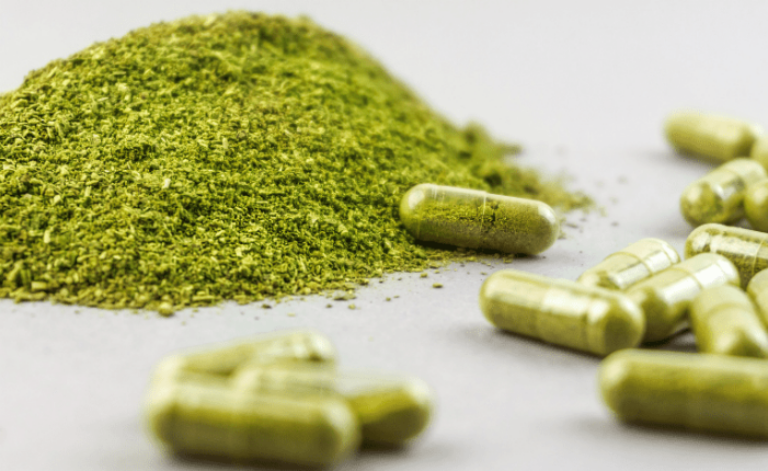
- Smoke shops and vape stores. These retailers frequently stock kratom in powder, capsule, liquid extract, and gummy form.
- Online retailers. Kratom is widely marketed on websites and social media with minimal age verification. Teens encounter it through influencers and online communities that normalize its use.
- Kratom bars and lounges. Some establishments serve kratom-infused beverages in a social setting, marketed as alcohol alternatives.
The Cost Barrier Is Almost Nonexistent
A small packet of kratom powder or a handful of capsules at a gas station typically costs between $10 and $50. Online, bulk powder can run as low as $0.08 to $0.15 per gram, making it cheaper per use than many energy drinks. The low price point, combined with bright, youth-friendly packaging and marketing language like “natural energy” and “mood support,” makes kratom devastatingly accessible to young people.
A Patchwork of Laws Leaves Gaps
As of early 2026, seven states have completely banned kratom: Alabama, Arkansas, Indiana, Louisiana, Rhode Island (though it is reversing its ban in April 2026), Vermont, and Wisconsin. Many other states have enacted varying regulations. Some require buyers to be 18 or 21. Some mandate labeling standards. Others restrict synthetic kratom products containing concentrated 7-OH. But in a large number of states, kratom remains completely unregulated, and even in states with age restrictions, enforcement is inconsistent. Teens report being able to purchase kratom without showing identification.
What Does Kratom Do, and What Makes It Dangerous?
The Effects That Draw Young People In
Teenagers report using kratom for reasons that sound deceptively benign: to stay awake while studying, to manage anxiety, to boost energy for sports, or simply to relax. At low doses, users experience increased alertness, sociability, and a mild euphoric lift. At higher doses, the effects shift toward sedation, pain relief, and a calming euphoria similar to opioids.
Kratom’s effects kick in within minutes and last several hours. Because the active compound content varies wildly between products, and because kratom is not regulated by the FDA, there is no reliable way for a user to know how potent any given dose will be. This unpredictability is itself a major danger.
Side Effects
Even at common doses, kratom frequently produces:
- Nausea and vomiting
- Constipation
- Dry mouth and sweating
- Dizziness and drowsiness
- Loss of appetite and weight loss
- Rapid heart rate (tachycardia)
- High blood pressure
- Confusion and agitation
- Muscle pain
At higher doses or with sustained use, more serious effects emerge: hallucinations, delusions, seizures, respiratory depression, liver damage, and cardiac arrhythmia. The FDA has received reports of deaths associated with kratom products, though most involved use alongside other substances.
The Risks That Should Keep Every Parent Up at Night
- Addiction and dependence. Regular kratom use can lead to tolerance, physical dependence, and withdrawal symptoms that mirror opioid withdrawal, including anxiety, irritability, insomnia, muscle aches, nausea, and intense cravings. Research indicates that about 25% of regular kratom consumers meet criteria for kratom use disorder, with younger users and those with psychiatric histories at elevated risk.
- Developing brains are especially vulnerable. Adolescent brains are still maturing, particularly the prefrontal cortex that governs decision-making, impulse control, and emotional regulation. Introducing an opioid-like substance during this critical developmental window increases the risk of lasting changes to brain chemistry and heightened vulnerability to addiction.
- No quality control. Because kratom is not FDA-regulated, products can vary dramatically in potency. Some have been found contaminated with salmonella, heavy metals like lead and nickel, or even adulterated with fentanyl or other dangerous substances. Analysis of kratom products purchased from tobacco and smoke shops has documented the presence of heavy metals including lead, nickel, and arsenic, with some samples containing manganese levels up to 20 times the tolerable upper intake limit.”
- Dangerous interactions. Kratom interacts with numerous medications and substances. Combining it with alcohol, benzodiazepines, opioids, or even some antidepressants can amplify sedation and respiratory depression to life-threatening levels. One documented case involved a 17-year-old whose death was linked to kratom used in combination with benzodiazepines and cold medication.
- Association with further substance use. Research shows that adolescent kratom use is significantly associated with concurrent cigarette smoking and cannabis use. Nearly one-third of lifetime kratom users have at least one co-occurring substance use disorder, with an 18-fold increase in opioid use disorder prevalence compared to non-users.
- Mental health impact. Over 26% of kratom users report past-year major depressive episodes, more than three times the rate among non-users. For adolescents already navigating the emotional turbulence of development, kratom use can deepen and complicate existing mental health challenges.
- Invisible to standard drug testing. Kratom does not appear on standard drug panels, which means parents, schools, and even treatment programs may not detect its use through routine screening. Specialized testing is available but expensive and rarely ordered.
What Should Parents Do If They Find Kratom?
Discovering that your child is using kratom can be frightening. Here is what I recommend, drawing from my clinical experience working with adolescents and families navigating substance use:
1. Stay Calm and Open the Conversation
Choose a time when you can talk without distractions. Avoid accusatory language. Lead with curiosity: Why are they using it? Is it for energy? Anxiety? Pain? Peer pressure? Understanding the underlying motivation is essential to addressing the root cause, not just the symptom.
2. Educate Yourself, Then Educate Them
Many young people genuinely believe kratom is safe because it’s “natural” and sold legally. Share what you’ve learned: that the FDA has warned against its use, that it can cause addiction and withdrawal, and that unregulated products may contain dangerous contaminants. Do not dismiss their experience, but help them understand the real risks behind the marketing.
3. Look for Warning Signs
Be alert for behavioral and physical changes that may indicate kratom use:
- Unexplained mood swings, irritability, or secrecy
- Changes in sleep patterns, whether excessive drowsiness or insomnia
- Nausea, sweating, or frequent stomach complaints
- Unusual packages, powders, capsules, or liquid shots in their room or backpack
- Withdrawal from friends, family, and responsibilities
- Declining school performance
- Increased spending at gas stations or unexplained online purchases
4. Monitor Purchases and Online Activity
Check labels on drinks and supplements in your home. Look for brand names associated with kratom products, as well as ingredients listing “mitragynine” or “7-OH.” Be aware that kratom is also marketed under names like biak, kakuam, ketum, and thom. Have conversations about what your child encounters online, particularly on social media platforms where kratom is actively promoted.
5. Partner with a Professional
If your child is using kratom regularly, professional guidance is important. Kratom withdrawal can be intensely uncomfortable and, in some cases, requires medical support. A pediatrician, adolescent medicine specialist, or therapist experienced in substance use can help assess the severity of use and develop an appropriate treatment plan. Addiction is a treatable condition. Medications and counseling can help.
6. Know Your Resources
- 988 Suicide & Crisis Lifeline: Call or text 988 for mental health and substance use support
- SAMHSA National Helpline: 1-800-662-4357 (free, confidential, 24/7)
- FindTreatment.gov: Search for local treatment programs
- Your pediatrician or family doctor: They can refer you to substance use specialists
Why This Matters to Holon Health
At Holon Health, our Juvenile and Caregiver Program, currently being piloted in a couple of states, was built on the understanding that substance use in young people rarely exists in isolation. It intersects with mental health, family dynamics, trauma, socioeconomic stress, and system involvement. Kratom is a growing part of this landscape, a substance that hides behind legality and “natural” branding while carrying genuine risks of dependence, health complications, and disrupted development.
We work with families to address these challenges through integrated, evidence-based care that meets young people where they are, not where we wish they were. If kratom is part of your family’s story, you are not alone, and help is available.
The most powerful thing a parent can do is stay informed and stay connected. Talk to your kids. Ask the hard questions. And don’t be fooled by a product just because it’s legal, sold in stores, or labeled “natural.”